As businesses achieve significant growth, they encounter a pivotal question: how should the next phase of growth be financed? Whether operating as a technology startup in Ebene or as an established manufacturing firm in Port Louis, the decision between debt and equity financing represents one of the most consequential choices for any CEO.
Kick Advisory has guided numerous clients through these complex decisions. In an environment characterized by fluctuating interest rates and dynamic global capital markets, a comprehensive understanding of debt and equity financing has become essential for organizational resilience.
This guide examines current trends in the fundraising landscape and provides insights to help align financing choices with strategic objectives.
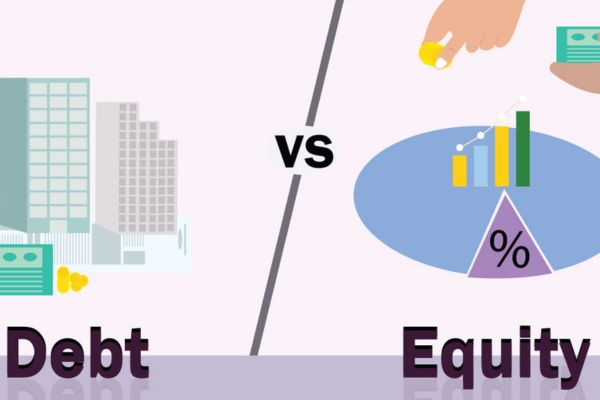
Fundamentally, the debate between debt and equity financing centers on issues of control and cost.
Debt financing entails borrowing capital that must be repaid with interest, allowing owners to retain full ownership while assuming a legal repayment obligation. In contrast, equity financing requires dilution or selling, or a combination of both. A portion of the business to investors, providing capital without monthly repayment obligations but resulting in shared future profits and decision-making authority.
For many organizations operating within the Mauritius International Financial Centre (IFC), an optimal solution frequently involves a balanced capital structure tailored to distinct growth milestones.
Debt financing continues to serve as a foundational strategy for Mauritian enterprises. The resilience of the local banking sector and the proactive monetary policy of the Bank of Mauritius have ensured that traditional loans remain a primary mechanism for business growth.
The Pros:
The Cons:
In 2024 and 2025, the African investment landscape has experienced a notable shift. Equity financing is increasingly favored in high-growth sectors such as Fintech and Cleantech. Recent reports indicate that equity now constitutes over 90% of startup funding across the continent.
The Pros:
The Cons:
However, with dilution the residual stake is likely to be valued more than the 100% investment made initially.
The financial landscape in 2025 has evolved significantly compared to previous years. To remain competitive, businesses must consider alternatives to traditional banking.
Navigating the complexities of debt and equity financing requires more than financial modeling. It demands a comprehensive understanding of market sentiment, investor preferences, and regulatory frameworks.
Fundraising advisory services provide critical support in this context. At Kick Advisory, our approach extends beyond capital sourcing to include the following:
Partnering with a leading financial advisory firm in Mauritius enables businesses to shift from seeking capital to presenting compelling investment opportunities.
There is no universal solution. For stable, cash-generating businesses seeking to retain full ownership, debt financing is often preferable. Conversely, companies scaling innovative technologies and seeking risk-sharing partners may benefit more from equity financing.
In the current volatile market, many successful companies employ a hybrid approach. The fundraising advisory team at Kick Advisory specializes in identifying an optimal capital structure that balances stability with growth objectives.
While growth involves inherent uncertainty, financing decisions should be grounded in data, strategic planning, and expert guidance, regardless of whether debt or equity is pursued.
At the end of the day, it is a question of the Weighted Average Cost of Capital. Usually Cost of Equity is higher than cost of debt and therefore the mix equity/debt has a material impact on the valuation of the Company.
1. Can I switch from debt-to-equity financing later?
Yes. Many companies start with debt and later bring on equity investors to scale. Conversely, some use equity to pay off expensive debt. This is known as recapitalisation.
2. Which is easier to secure: debt or equity?
This depends on your stage. Established companies with assets find debt financing easier. Early-stage startups with high growth potential but no assets usually find equity financing more accessible through venture capital.
3. Does Kick Advisory provide fundraising advisory services for international expansion?
Absolutely. We leverage the Mauritius IFC to help businesses structure deals that facilitate growth across Africa, Asia, and Europe.
4. How do interest rate hikes affect the debt vs equity decision?
When interest rates rise, debt financing becomes more expensive. This often pushes companies toward equity financing, even as investors in a high-rate environment demand higher returns.
5. Why is Kick Advisory considered one of the best financial advisory firms in Mauritius?
Our approach is client-centric. We don't just offer services; we deliver on a CEO’s agenda, combining decades of experience with a passion for driving innovative corporate finance solutions.