



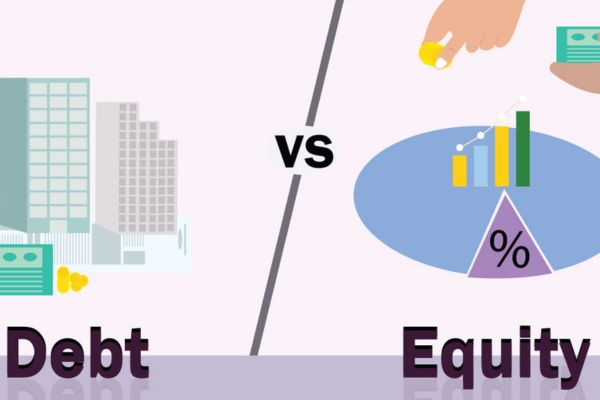
The choice between debt financing vs equity financing comes down to three factors: your cash flow strength, how much control you want to retain, and where your business is in its lifecycle. Debt is cheaper and preserves ownership; equity shares risk and bring strategic value. Most growing businesses use a hybrid of both.
Introduction
Whether you run a tech startup in Ebene Cybercity or an established manufacturing firm in Baie du Tombeau, the choice between debt vs equity financing will be one of the most consequential decisions you make.
It determines how much of your business you keep, how much risk you carry, and how fast you can grow. Get it right, and you unlock the next phase of your business. Get it wrong, and you either stall for lack of capital or give away ownership you cannot recover.
This guide breaks down both options clearly, compares their real costs in the Mauritius context, and gives you a decision framework you can apply directly to your situation.
What is the difference between debt vs equity?
Debt financing means borrowing money with an obligation to repay it, usually with interest, on a fixed schedule. The lender has no ownership stake in your business; they are a creditor, not a partner. Examples include bank term loans, working capital lines, invoice financing, and bond issuances.
Equity financing means raising capital by giving investors an ownership stake in your business. There are no monthly repayments. Instead, investors share in the profits and the risks proportionally to their stake. Examples include angel investment, private equity, venture capital, and listing on the Stock Exchange of Mauritius (SEM).
The core trade-off: debt is cheaper but requires repayment discipline; equity is more expensive long-term but aligns investor success with yours.
What does each option actually cost? A side-by-side comparison
The real cost of a funding decision is rarely just the headline interest rate. Here is a structured comparison across the factors that matter to a business owner in Mauritius:
|
Factor |
Debt financing |
Equity financing |
Hybrid |
|
Typical cost (Mauritius) |
8–14% p.a. (bank term loan) |
25–35% IRR expected by PE |
Blended WACC 15–22% |
|
Repayment obligation |
Yes, fixed schedule |
No, profit share only |
Partial debt service |
|
Owner control |
Retained fully |
Diluted (board seat likely) |
Partial dilution |
|
Tax benefit |
Interest deductible (MRA) |
Dividends not deductible |
Interest portion deductible |
|
Best for stage |
Profitable / asset-rich |
High-growth / pre-profit |
Scaling businesses |
|
Security required |
Usually yes (collateral) |
No, equity at risk |
Partial collateral |
|
Time to close |
4–12 weeks |
3–9 months |
Varies by structure |
Key insight: The WACC (Weighted Average Cost of Capital) framework shows that the optimal capital structure is almost never 100% debt or 100% equity. A business with MUR 50m in equity and MUR 25m in debt (2:1 E/D ratio) at a blended WACC of 16% will be valued materially higher than the same business financed entirely by equity at a 30% cost.
Equity financing vs debt financing: Which is right for your stage?
When weighing debt financing versus equity financing, the decision is rarely about which option is universally better, it is about which is right for your business at this specific stage. Use this matrix:
|
Business situation |
Cash flow |
Recommended route |
Why |
|
Early-stage startup, pre-revenue |
None / negative |
Equity (Angel / VC) |
No debt service possible; investors accept high risk for equity upside |
|
Growth-stage, revenue positive, needs scale capital |
Positive but thin |
Hybrid: equity lead + working capital line |
Equity funds growth; debt covers day-to-day without dilution |
|
Established business, predictable EBITDA |
Strong & stable |
Debt first (term loan/bonds) |
Cheapest cost of capital; owner retains 100% control |
|
Distressed / turnaround |
Negative or erratic |
Equity or debt-to-equity swap |
Lenders unlikely to extend new credit; equity investor buys risk |
|
Pre-IPO or acquisition target |
Positive |
Clean equity (PE round or SEM listing) |
Maximises valuation; reduces gearing ratio for acquirer |
In practice, most businesses growing beyond MUR 20m in revenue will find that a hybrid structure,
Combining a bank term loan for asset acquisition with equity for working capital and growth produces the lowest blended cost of capital and the best valuation outcome.
Equity and debt financing in the Mauritius context: what is different here?
Mauritius operates a distinctive financial ecosystem that shapes how businesses access both debt and equity. Understanding the local landscape gives you a significant advantage when structuring a capital raise.
Debt financing options in Mauritius
- Bank term loans: Available through the major commercial banks (MCB, AfrAsia, SBM, Absa MU). Typical rates for secured lending currently range from 8% to 14% p.a. depending on tenure, security, and the borrower's credit profile.
- Development Bank of Mauritius (DBM): A government-backed institution providing concessional lending to SMEs and priority sectors. Rates are typically below market, a key option for qualifying businesses before approaching commercial banks.
- SEM bond market: Mid-sized and larger businesses can issue corporate bonds on the Stock Exchange of Mauritius, bypassing the banking system entirely. This route has grown significantly since 2024, offering competitive rates for creditworthy issuers.
- Private credit funds: Following global trends, several private credit vehicles now operate through the Mauritius IFC, offering flexible structured debt to companies that need more than a standard bank loan.
Equity financing options in Mauritius
The Mauritian entrepreneur community has a deep base of high-net-worth individuals who co-invest in local businesses, particularly in tourism, fintech, and agribusiness.
- Private equity via the IFC: Mauritius is a primary holding jurisdiction for African PE funds. Over 50 private equity vehicles are domiciled in Mauritius under the Financial Services Commission (FSC). Businesses structured here have direct access to African-focused PE capital.
- SEM equity listing: The Development and Enterprise Market (DEM) on the SEM provides a listing pathway for smaller businesses. An SEM listing gives your equity a public reference price and broadens your investor base substantially.
- AFRINEX: The newer AFRINEX Stock Exchange, also based in Mauritius, provides an additional route to equity capital for pan-African businesses.
Regulatory considerations
All capital raises involving foreign investors or offshore structures in Mauritius fall under FSC oversight. Businesses raising equity through a GBL1 or GBL2 structure must comply with the Financial Services Act 2007 and relevant IPPA protections. Tax treaty benefits: Mauritius has over 45 DTAAs. can materially affect the post-tax cost of both debt and equity when cross-border structures are involved.
Read more: When Should We Go for Equity or Debt in Fundraising?
Latest trends shaping the debt vs equity decision
The capital markets environment has shifted significantly since 2023. Here are the trends most relevant to Mauritius-based businesses:
- Rising private credit. Traditional banks have tightened credit standards globally. Private credit funds, which operate outside bank regulation, now fill the gap by offering flexible, covenanted debt to mid-market businesses. In Mauritius, several IFC-domiciled credit funds have become active lenders.
- ESG-linked pricing. Both debt and equity investors now price ESG performance into their terms. A strong ESG framework can reduce your interest rate on a green bond or improve your valuation multiple in an equity round. Investors through the Mauritius IFC increasingly require ESG disclosures as a precondition of investment.
- AI-assisted valuations. Capital advisory services now use AI tools to model valuation scenarios and stress-test capital structures before approaching investors. This reduces the risk of founders accepting poor terms due to information asymmetry.
- Convertible instruments are gaining popularity. Convertible notes and SAFEs allow early-stage companies to raise capital without setting a valuation upfront. The note converts to equity at the next priced round, typically at a discount. This structure is increasingly used in Mauritius fintech and cleantech startups.
What is a hybrid capital structure, and when should you use it?
A hybrid structure combines debt and equity, or uses instruments that sit between them, to achieve a lower blended cost of capital than either route alone.
Common hybrid instruments
- Mezzanine debt: Subordinated debt with equity warrants. The lender earns interest and holds the option to convert a portion to equity. Useful when a business can service some debt but not the full amount needed.
- Convertible notes: Short-term debt that converts to equity at a future priced round. Useful for early-stage businesses that want to raise quickly without setting a valuation.
- Preference shares: Equity with debt-like features, fixed dividends, priority in liquidation. Used by PE investors who want downside protection while participating in upside.
- Revenue-based financing: Repayments linked to monthly revenue rather than fixed instalments. Gaining traction for SaaS and subscription businesses with predictable but seasonal revenue.
What does a fundraising advisor actually do?
A fundraising advisor does more than make introductions. The right advisor adds value at every stage of a capital raise:
- Readiness assessment: Reviewing financial statements, cleaning up the balance sheet, stress-testing projections, and identifying gaps that would cause investors to discount valuation before you enter conversations.
- tructuring: Deciding which instrument, term loan, convertible note, preference equity, mezzanine, produces the lowest cost of capital for your specific situation. Structure often matters more than the headline amount raised.
- Valuation: For equity raises, the pre-money valuation negotiation directly determines how much of the business you give away. An independent valuation from a qualified advisor is your strongest negotiation tool.
- Investor targeting: Matching your business to investors whose mandate, return expectations, and sector focus align with yours, not just any investor willing to write a cheque.
- Process management: Managing the data room, due diligence requests, legal review, and closing timeline, so management can keep running the business while the raise progresses.
Conclusion: How to make the right call for your business
There is no universally correct answer between debt and equity. The right structure depends on your business stage, cash flow strength, growth ambitions, and how much control you want to retain.
If your cash flow is strong and predictable, debt is almost always cheaper, and the interest is tax-deductible in Mauritius. If you are pre-profit, scaling rapidly, or need the strategic value of an investor relationship alongside the capital, equity, or a convertible instrument is likely the better path.
For most businesses at the growth stage, a hybrid structure, with debt covering capital expenditure and equity funding the growth ambition, produces the best combination of cost and flexibility.
The most important variable is often not which route you choose, but how well you prepare before you approach any investor or lender. Valuation, structure, and timing all affect the outcome more than the amount raised.
Working with an experienced advisory team early, before you approach investors, gives you the clarity, preparation, and negotiating position to raise capital on terms that support long-term growth rather than creating pressure you will feel for years.
How Kick Advisory can help
Kick Advisory has guided businesses through capital raises across the full spectrum, from MUR 5m working capital facilities to multi-hundred-million-rupee private equity transactions. Our team provides independent valuation, deal structuring, investor targeting, and process management for both debt and equity raises in Mauritius and across Africa. If you are planning a capital raise in the next 12 months, the right time to start the conversation is now, before you approach a bank or investor.
FAQs
Q1 What is the difference between debt and equity financing?
Debt is borrowed money repaid with interest, the lender has no ownership. Equity means selling an ownership stake: no repayments, but investors share profits and governance. Debt keeps control; equity shares risk.
Q2 Equity financing vs debt financing: which is better for a growing business?
Neither is universally better. "Better" depends on your stage, cash flow, and control preference. Early-stage and pre-profit businesses generally need equity. Cash-flow-positive businesses with assets can usually access cheaper debt. Most scaling businesses use a hybrid of both.
Q3 What is a healthy debt-to-equity ratio?
For most mid-sized businesses, a D/E ratio below 2:1 is considered manageable. Asset-heavy industries (manufacturing, real estate) can carry higher ratios than service businesses.
Q4 Can a company use both debt and equity at the same time?
Yes, this is called a hybrid or blended capital structure. Most mature companies use both. The optimal mix minimises WACC (Weighted Average Cost of Capital) and is almost never 100% of either.
Q5 What happens if you give away too much equity early?
Founder dilution below ~40–50% can reduce control and motivation. Later funding rounds dilute further. This is why early-stage valuation negotiation is critical, it determines how much of the business you give away for every rupee raised.
Q6 How do interest rate changes affect the debt vs equity decision?
Rising rates make debt more expensive, pushing businesses toward equity. Falling rates make debt attractive again. In Mauritius, the Bank of Mauritius key rate directly influences commercial lending rates from MCB, SBM, AfrAsia, and Absa MU.
Q7 What is WACC and why does it matter for fundraising?
WACC (Weighted Average Cost of Capital) is the blended cost of all your capital. A lower WACC increases company valuation. Your debt/equity mix directly determines WACC, which is why optimising capital structure is as important as the amount raised.














The Hottest Valuation Trends for 2024

